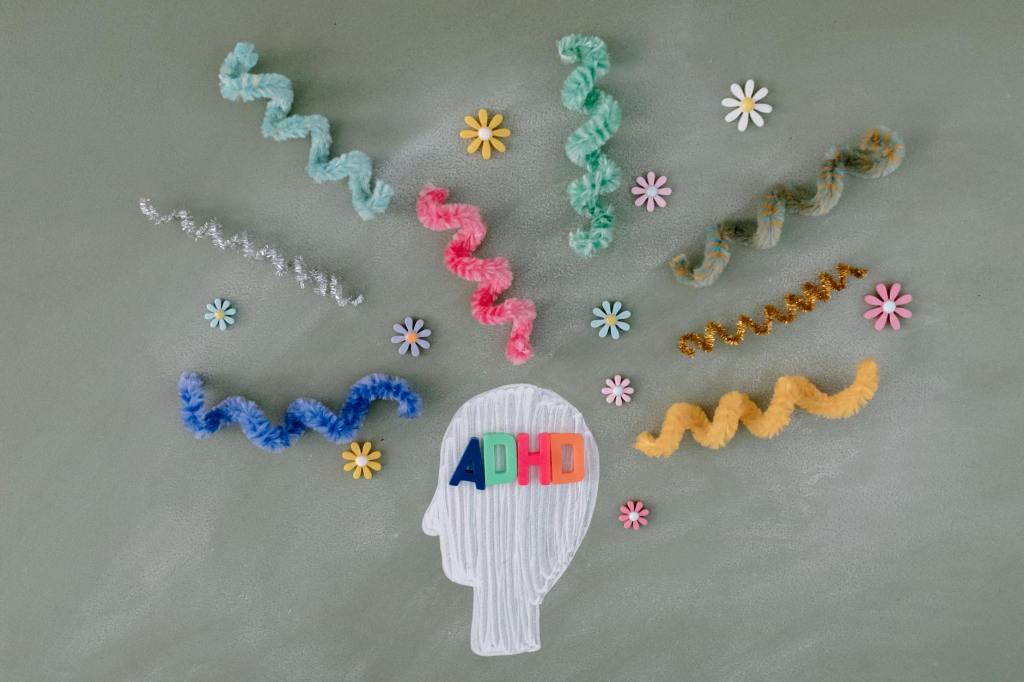
I am neurodivergent.
You may be wondering what that means. It means my brain functions differently than a neurotypical brain. I have dyscalculia and ADHD. As the famous song by AURORA says, I don’t need a cure for me. This article will further explain the meaning of neurodiversity. As well as share my personal neurodivergent experience.
The term neurodiversity was first coined in 1998 by Judy Singer, an autistic sociologist. She wrote that neurodivergence describes the natural variation in brain function and behaviour among humans. Her exact definition is:
„Neurodiversity is a biological truism that refers to the limitless variability of human nervous systems on the planet, in which no two can ever be exactly alike due to the influence of environmental factors.“
Judy Singer
This implies that neurodivergent people are not mentally disordered or abnormal. Their brains just naturally work differently, with different strengths and weaknesses, not deficits. 1
Inspired by this idea, a social justice movement emerged that demands neurodevelopmental conditions to be treated as valuable variations in human neurology. This includes people with autism, dyslexia, dyscalculia, and AD(H)D.2 Their motto is: There is no diversity without neurodiversity! Even within this social justice movement, there is an ongoing debate if neurodivergence should be classified as a disability or not.
Autism spectrum disorder (ASD) as well as Attention deficit hyperactivity disorder (ADHD) are both classified as neurodevelopmental disorders in the ICD-11. 3 There is a high co-morbidity between ASD or ADHD and mental illness. Many studies show that mental disorders are over-represented in the neurodivergent population. On average, adults with ADHD experience three co-occurring disorders, with around 70% of individuals eventually diagnosed with ASD or ADHD having first presented with co-occurring psychiatric disorders.4
Neurodivergent people belong to a minority that faces discrimination daily. It takes a lot of energy to exist in a world built for neurotypical people. Thanks to recent developments in medical research, neurodivergent personality traits are no longer exclusively defined as mental disorders. 5 To me, the notion that only a neurotypical brain is a normal and healthy brain is outdated and ableist.
What does this mean for the individual? No two people have the same brain, so they can’t share the same experiences. Our brains are very complex and cannot be categorized without making broad assumptions. For me, being neurodivergent has positive and negative impacts on my life.
My executive function or dysfunction greatly depends on my current mood, motivation, and mental capacity.6 Some days, this means I can work for many hours uninterrupted with hyperfocused tunnel vision. On other days, this means I can’t start any task because I am paralyzed, so I end up doing nothing for hours. Others might mistake that as being lazy. But the truth is, my neurons keep firing, and my brain is running in high demand. It’s like having 50 browser tabs open: You keep clicking through them without ever finding what you are looking for. And where does the music come from?
This has been just a small insight into my neurodivergent brain related to my productivity. Being productive is all that counts in our capitalist world anyway, right? However, I also want to highlight the positive impact my neurodivergent brain has on my work. I am great at thinking outside of the box. Where others see a problem, I see ten possible solutions. My creativity is limitless, so my mind is always full of numerous ideas. The daily struggle is having a sufficient executive function to follow up on my creative ideas.
I hope this post helped you understand and empathize with this universal truth:
There is no diversity without neurodiversity!
Feel free to comment your thoughts! I am no expert, so I can only talk about my personal experience. Do your research! You can start by reading through the compiled sources and studies below.
- Reflections on the Neurodiversity Paradigm: Neurodiversity: Definition and Discussion by J. Singer ↩︎
- Neurodevelopmental disorders and neurodiversity: definition of terms from Scotland’s National Autism Implementation Team | The British Journal of Psychiatry | Cambridge Core ↩︎
- Autism spectrum disorder in ICD-11 for Mortality and Morbidity Statistics by WHO
Attention deficit hyperactivity disorder in ICD-11 for Mortality and Morbidity Statistics by WHO ↩︎ - The essence of autism and other neurodevelopmental conditions: Rethinking co-morbidities, assessment, and intervention by C. Gillberg ↩︎
- Neurodiversity | Definition, Movement, & Affirming | Britannica ↩︎
- ADHD and Executive Dysfunction: Link, Symptoms, and Tips ↩︎

 Dichtende Designerin
Hinterlasse einen Kommentar